
Los Angeles Times Magazine
The world’s largest wildlife crossing is finally getting plants. Animals are a year away
- Published Oct. 22, 2025 3 AM PT
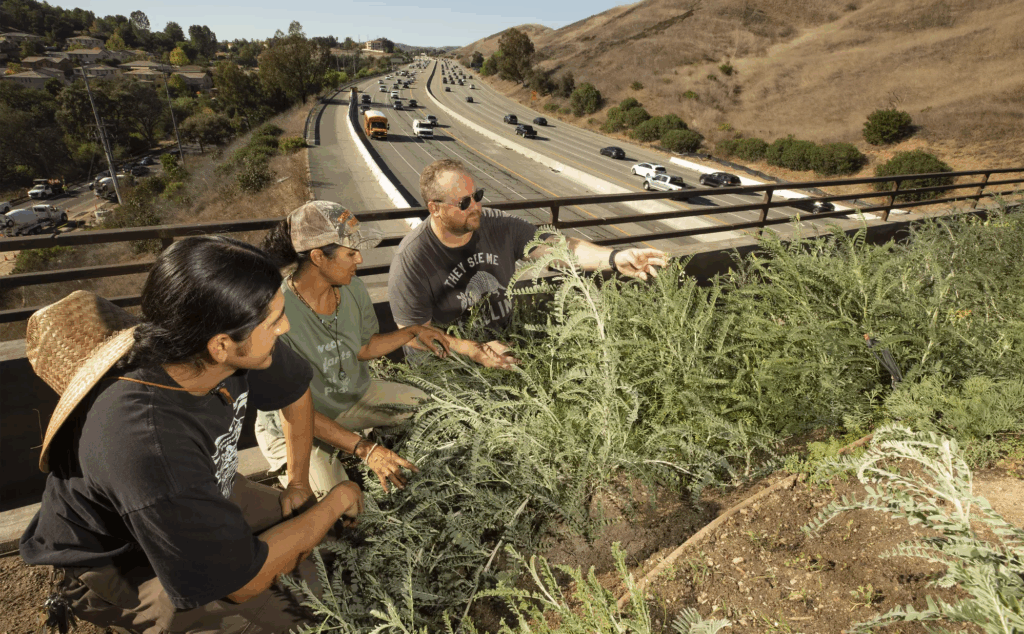
It’s been three years since the crew for the Wallis Annenberg Wildlife Crossing Native Plant Nursery set up shop in Calabasas, with dozens of difficult-to-assemble metal tables, a spartan trailer and a million native seeds hand-collected from the surrounding hills.
That’s three years that nursery managers Jewlya (pronounced “Julia”) Samaniego and Jose Campos have nurtured thousands of native plants from seed, despite plenty of rattlesnakes, hordes of pot-gnawing squirrels, the vile smelling essence of cougar pee to repel the squirrels, blistering summers that required twice-a-day watering, even on weekends and holidays, and a couple winters of mud, erosion and endless rain.
Read More!
(Al Seib / For The Times)
